


Destruction of Cultural Heritage: Vandalism, War Crimes or Cultural Genocide?
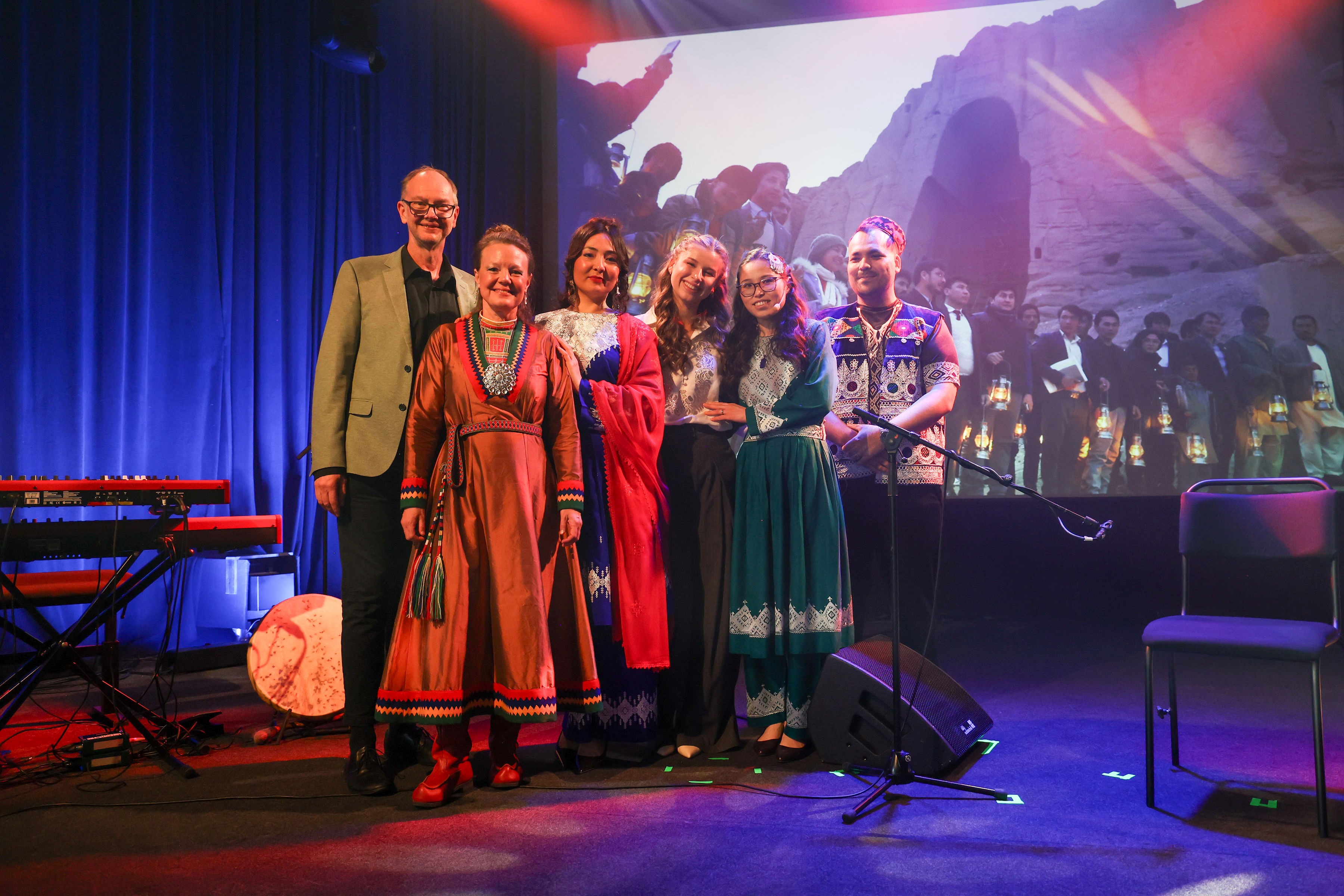
On the occasion of the 24th anniversary of the destruction of the Bamiyan Buddha statues by the Taliban, the 14th edition of ‘A Night with Buddha’ was held on Friday, May 22 at Kulturhuset Stadsteatern in Stockholm. The event was held in collaboration with Stockholm University and Kulturhuset Stadsteatern. The music project 'Songs of Survival' was supported by the Benny Andersson Foundation.
This year’s theme was ‘Destruction of Cultural Heritage in War: Vandalism, War Crime, or Cultural Genocide?’ A panel of experts, researchers, and cultural activists discussed the legal, political, and social aspects of cultural heritage destruction in international conflicts.
At the beginning of the event, cultural and human rights activist Zahra Hussaini presented the history of the program, which started in Bamiyan and has grown into an international platform for dialogue and awareness on cultural heritage protection. She emphasised that the destruction of the Bamiyan Buddhas in 2001 was a major blow to collective memory, but the act of remembrance continues. Hussaini was the ICORN resident in Stockholm between 2021 and 2023.
Beyond commemorating the destruction of the Buddha statues, the event also created a space for dialogue about current challenges facing cultural heritage, cultural rights, and the preservation of both tangible and intangible heritage in times of conflict and exile.
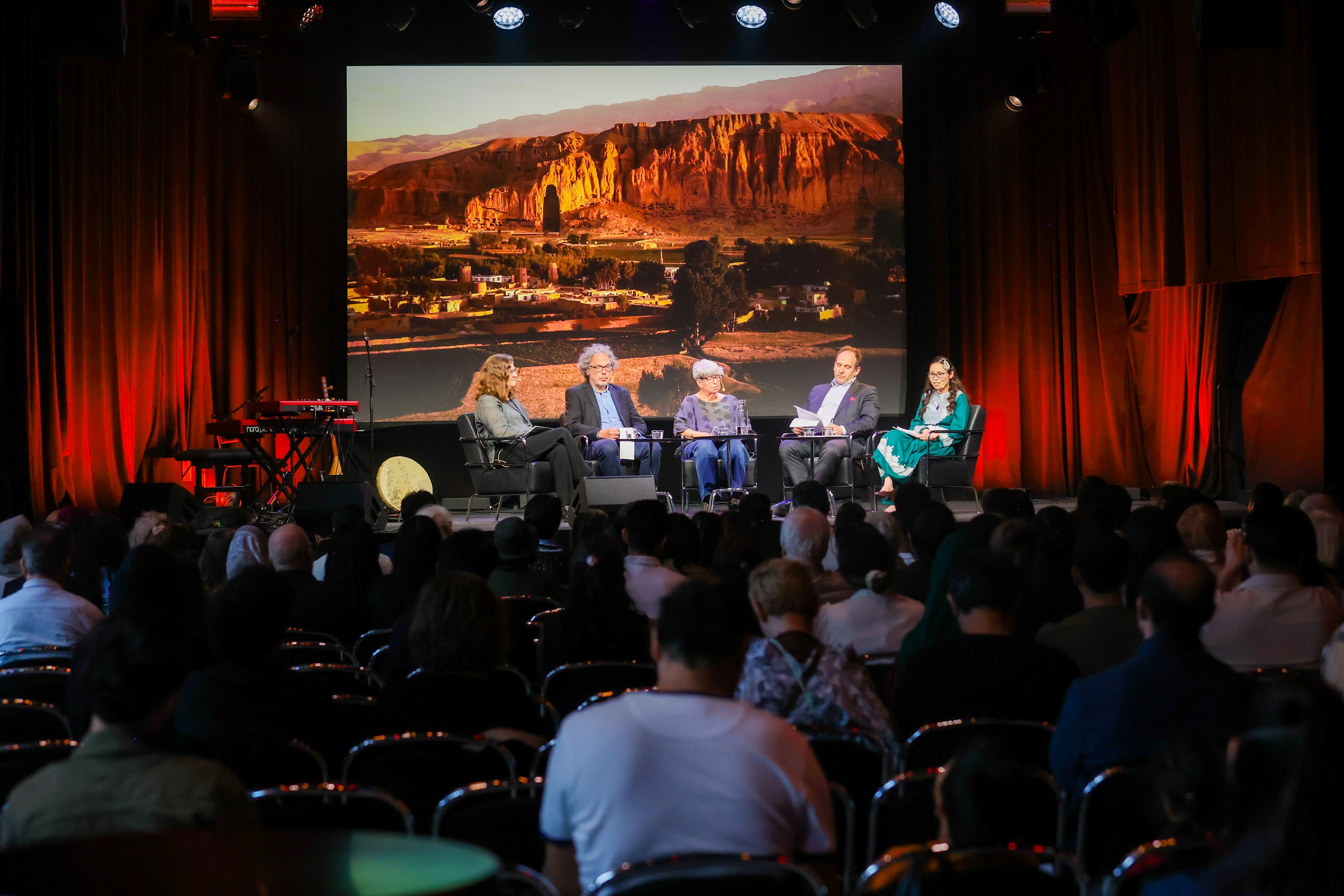
Mark Klamberg, Professor of Public International Law at Stockholm University discussed the legal concept of ‘cultural genocide’ and the limits of international law, explaining that cultural destruction is not defined as genocide under current law, but may be prosecuted as a war crime. He also referred to key international cases involving the destruction of cultural heritage.
Isa Blumi, Professor of History at Stockholm University, criticised Western approaches to cultural heritage protection, arguing that safeguarding Bamiyan should go beyond reconstruction and include restoring agency and dignity to the Afghan people. He also highlighted the illegal trade of cultural artifacts in conflict zones.
Journalist Lotta Schüllerqvist spoke about the large-scale destruction of cultural infrastructure in Gaza and introduced efforts to establish a ‘Gaza Archive in Sweden’.
The second part of the event featured the music program ‘Songs of Survival’, performed by Elaha Soroor, Maria Sur, and Elin Teilus. The performance highlighted cultural solidarity and artistic resistance to war and destruction, including a special collaborative piece by all three artists.
While the panel discussion focused on the destruction and protection of cultural heritage, the music program demonstrated how intangible cultural heritage continues to survive through music, language, memory, and artistic expression. Together, the two parts of the event reflected both the vulnerability and resilience of culture in times of conflict and exile.
You can watch a stream of the event here:

